
PRP Facial for Skin, Not Hair: What the Vampire Facial Actually Does to Your Face
Home
Services
Key Takeaways
- The Vampire Facial uses the same PRP technology used for hair regrowth, but applied to facial skin instead of the scalp.
- It works by stimulating your skin's own collagen production, which improves texture, tone, and overall radiance over time.
- It's particularly effective for fine lines, mild acne scarring, and an overall dull or tired complexion.
- Because it uses your own blood, the risk of allergic reaction is minimal compared to some other injectable treatments.
- Results build gradually over several weeks as new collagen forms, rather than appearing immediately after the session.
We've written before about PRP for hair regrowth, but it's worth being clear that the same underlying technology has an entirely separate, well-established use on facial skin. The name "Vampire Facial" tends to grab attention, but what's actually happening underneath is worth understanding properly.
Same Technology, Different Target
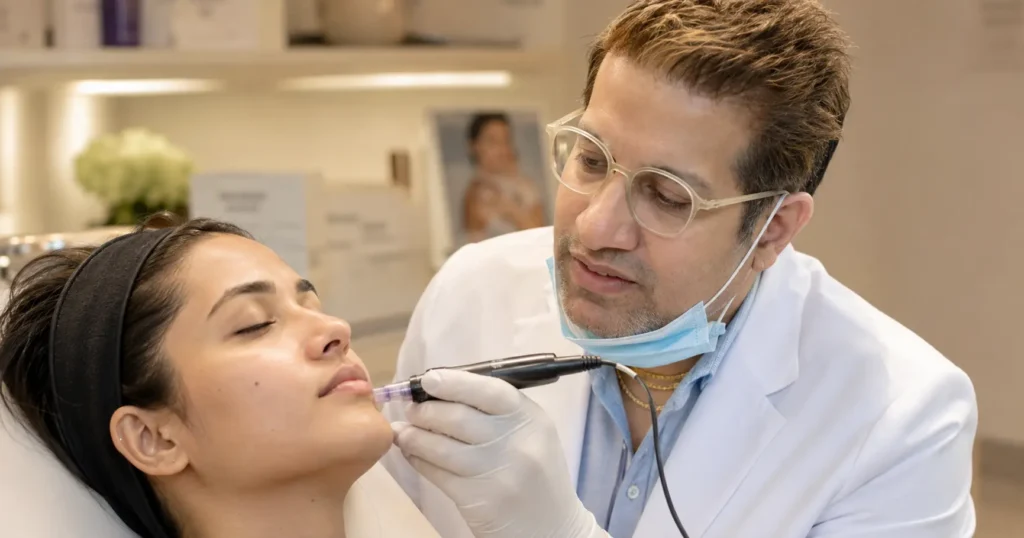
PRP therapy starts the same way regardless of whether it's being used on your scalp or your face: a small draw of your own blood is processed to concentrate the platelet-rich plasma, separating it from other blood components. For the facial version, that concentrated plasma is then applied to the skin, typically alongside micro-needling, to deliver growth factors directly into the skin's deeper layers where collagen production actually happens.
What It Actually Improves
The Vampire Facial is generally most effective for concerns tied to skin quality and mild structural changes, rather than deep wrinkles or significant volume loss. This includes fine lines, uneven texture, mild acne scarring, and the kind of overall dullness that comes from reduced collagen production as skin ages. It's less about dramatic transformation and more about a gradual, natural-looking improvement in how healthy and radiant your skin actually looks.
Why Using Your Own Blood Matters
Because the treatment uses plasma derived from your own body rather than a synthetic or donor-based product, the risk of allergic reaction or rejection is minimal. This is one of the reasons PRP has remained a popular option even as newer treatments like exosome boosters have entered the market, there's a level of biological familiarity here that some clients specifically prefer.
Regenerative aesthetic medicine literature has consistently noted that platelet-rich plasma's growth factor content plays a direct role in stimulating collagen synthesis, which is the underlying mechanism behind the treatment's effect on skin texture and tone.
What a Session Actually Involves
After the blood draw and processing, a numbing cream is typically applied to keep the micro-needling portion of the treatment comfortable. The concentrated plasma is then worked into the skin, often through the micro-channels created during needling, which allows it to reach the deeper dermal layer where collagen stimulation actually takes place. The full session usually takes under an hour.
What Recovery Looks Like
- Mild redness and slight swelling for one to two days, similar in intensity to a moderate sunburn.
- Some clients notice pinpoint marks from the micro-needling that fade within a day or two.
- Makeup is generally best avoided for at least a day to reduce irritation risk.
- Sunscreen becomes essential during recovery, since freshly treated skin is more vulnerable to UV exposure.
How It Compares to a Hydrafacial
This comparison comes up often, since both are associated with glow and skin rejuvenation. A Hydrafacial works on the skin's surface through cleansing, exfoliation, and serum infusion, with no needles involved. The Vampire Facial works at a deeper level, stimulating your body's own collagen production rather than delivering topical ingredients. Many clients actually use both, a Hydrafacial for regular surface maintenance, and a PRP facial periodically for deeper, longer-lasting structural improvement.
Common Questions We Get About the Vampire Facial
Is it painful?
Numbing cream is applied beforehand, which keeps most of the discomfort manageable. Some clients describe mild stinging during the micro-needling portion, but it's generally well tolerated.
How many sessions will I need?
A short course, typically spaced a few weeks apart, tends to show the best results, though some clients opt for a single session as an occasional refresh rather than a full course.
How long do results last?
Results build gradually and can last several months, though maintenance sessions every few months are common among clients who want to sustain the improvement over the long term.
Can this be combined with Botox or fillers?
Yes, and it's a common combination since PRP addresses skin quality while Botox and fillers address movement lines or volume separately. Your specialist can advise on sequencing if you're combining treatments.
If dull, tired-looking skin has been bothering you more than any single deep wrinkle or line, the Vampire Facial is worth discussing. Book a consultation and we'll assess whether it, or a different combination of treatments, fits what your skin is actually asking for.